I’ve organized and co-organized several rallies, attended virtual meetings, and participated in a number of in-person gatherings with some genuinely great people who helped and are continuing to help along the way. But after reflecting on those experiences, I’ve started to grow disillusioned with the performative aspects of many of these events. That realization has forced me to take a step back and reassess what actually builds lasting power and meaningful change.
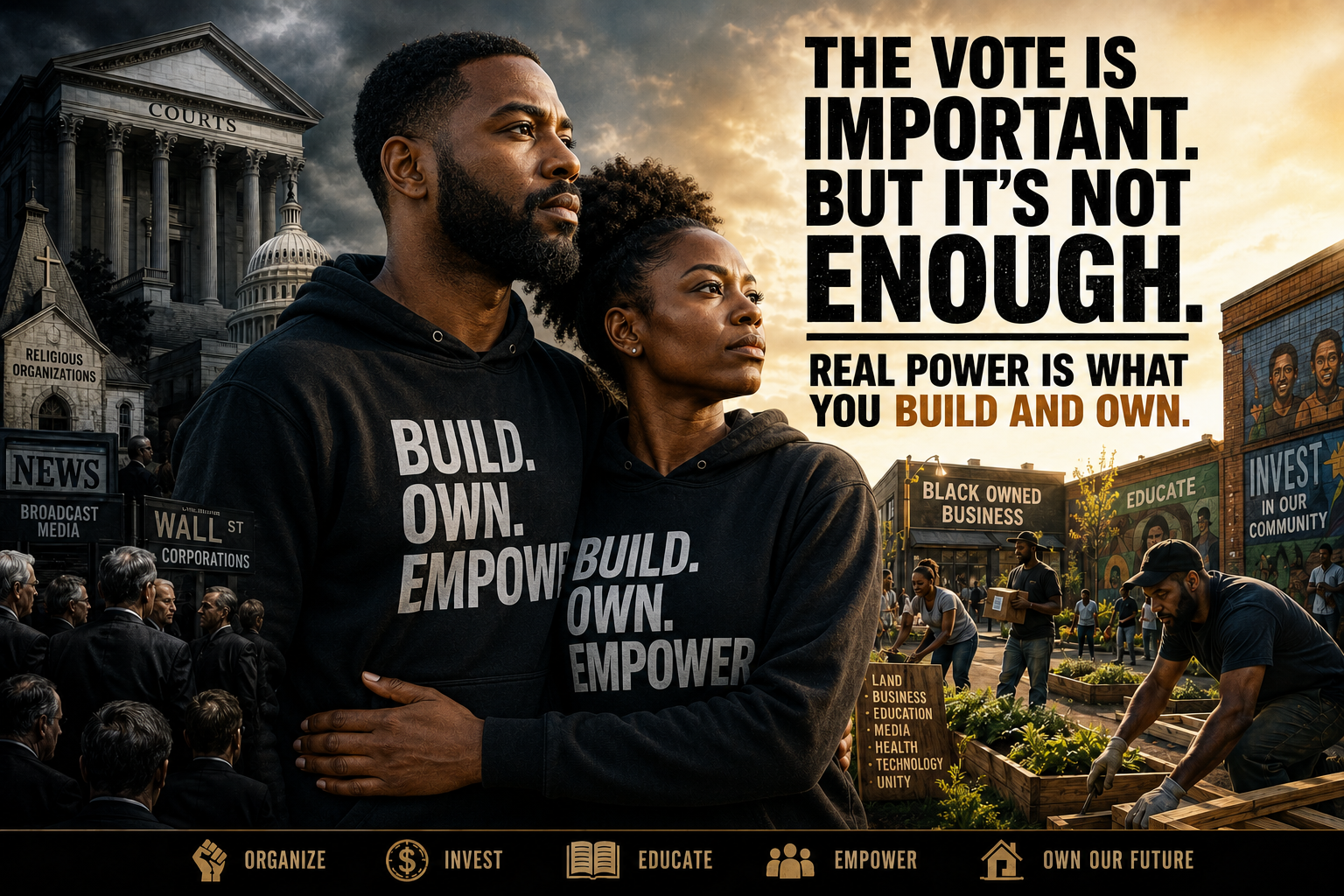
This administration has exposed something many people spent years pretending not to see. It exposed the true intentions and bad faith of political actors across nearly every institution in American life, judges, congressmen, senators, religious organizations, broadcasters, corporations, social organizations, and business leaders. Under pressure, people and institutions eventually reveal what they truly value, who they truly protect, and what they are willing to tolerate.
For Afro Americans, none of this should be surprising anymore. The uncomfortable reality is that the vote did not protect us from this moment, and the vote will not rescue us from it either. That statement is not an argument against voting. It is an argument against dependency.
For generations, we have been told that political participation was the pathway to security, justice, equality, and stability. We were told that if we organized enough voter drives, elected enough officials, and remained loyal enough to political coalitions, the system would eventually correct itself. But that was a dream with a shifting goal post that we could never reach.
But what happens when the institutions themselves are compromised? What happens when courts become arenas for political power instead of impartial justice? When lawmakers abandon principles? When corporations privatize profits while socializing losses? When media organizations shape narratives for profit rather than truth? When even organizations claiming moral authority are co-conspirators of racists, criminals and thieves? What happens when political power is weaponized along the color line? The answer is what we are witnessing now.
An argument could be made that the problem is simply turnout, that there are not enough Afro Americans voting. But demographics alone expose the limits of that argument. Afro Americans represent roughly 14 percent of the electorate. That means our political influence has always depended heavily on coalition building and the willingness of others to uphold shared principles. Sometimes they do. Sometimes they don’t. That is the risk of building your future entirely inside systems you do not control. The lesson here is not to abandon the vote. Fight for the vote. Protect the vote. Use the vote. But understand its limits.
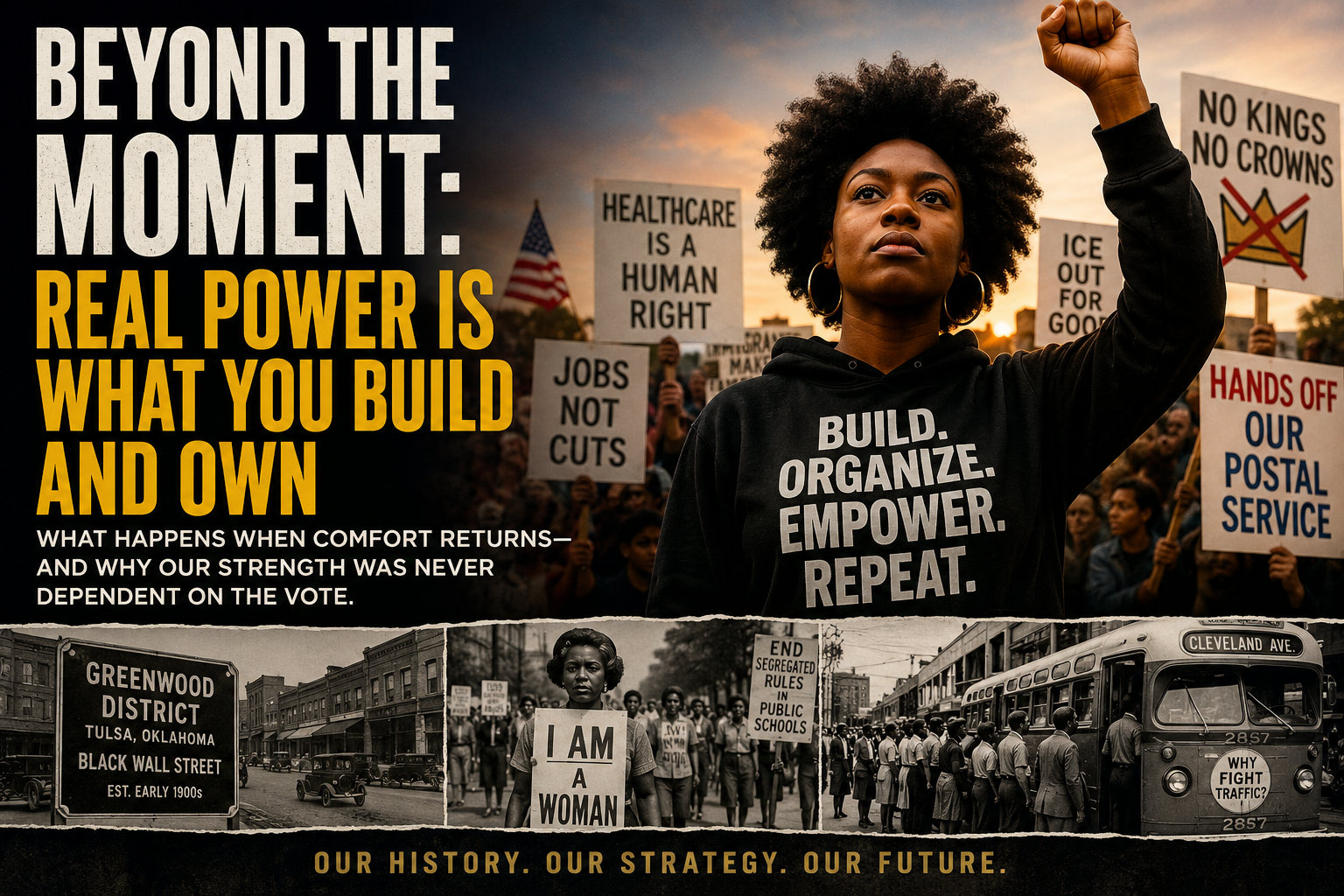
Voting is not power by itself. Voting is only leverage and leverage only matters when it is backed by organization, economics, institutions, discipline, and collective interests. Real power is built from the ground up. Too often, we have approached politics as pawns instead of players, waiting for institutions to save us instead of constructing institutions capable of sustaining us. No community survives long term on symbolism alone.
History shows that every successful group eventually understood this principle: cultural survival requires institutional survival. Communities that endure build schools, banks, businesses, legal organizations, advocacy groups, supply chains, media outlets, and economic ecosystems that can function regardless of who occupies political office. Politics is a part of our world and it matters.
But politics without infrastructure becomes dependency. That is why grassroots organization matters now more than ever. Not performative outrage. Not temporary hashtags. Not emotional reactions that disappear once comfort returns. Sustained organization. Local business networks. Trade education. Independent media platforms. Community investment groups. Agricultural ownership. Technology training. Youth mentorship. Economic cooperation. Legal defense funds. Political education, and strategic coalition building rooted in mutual interests instead of blind loyalty.
Examples of this already exist in microcosms across the country, proving that cooperation is possible when people focus on shared goals instead of personal recognition. That mindset must expand and egos must be checked at the door if real collective power is ever going to be built by and for us.
The future will not belong to the loudest people. It will belong to the most organized people. This moment is forcing many people to confront a difficult truth: rights that exist only on paper can become fragile when institutions change. That is why survival cannot depend entirely on politics from above. It must also be built from below. The vote is a tool. But a tool is only as powerful as the hands and institutions behind it.
And if this era has revealed anything clearly, it is this:
Our future will either be dictated to us or determined by us? And there will be no one to blame but ourselves .

Leave a Reply