
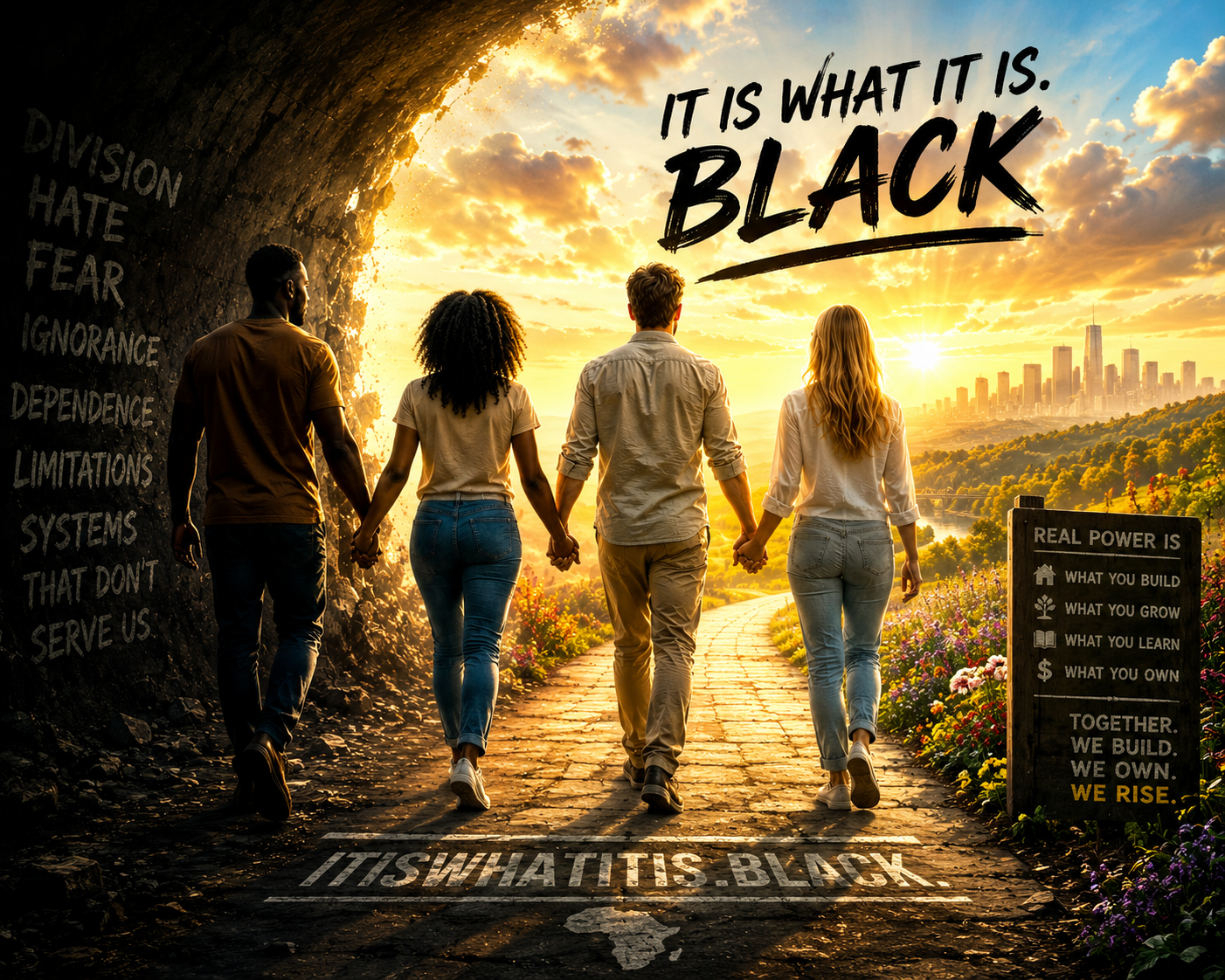
The Alliances That Brought Us Here and Maintained the Status Quo Cannot Build Blackberry Grove
For generations, Afro-Americans have formed alliances in pursuit of survival, dignity, opportunity, and protection under a system that often denied all four. Some of those alliances were necessary. Some were historic. Some opened doors that otherwise would have remained closed. Some helped secure civil rights, labor protections, voting rights, educational access, and legal recognition under the law.
But can or would the alliances that helped to bring us here help us build Blackberry Grove, a place where Mayberry and Black Wall Street intersect,? I don’t know the answer to that but it deserves some serious consideration.
An argument can be made that some alliances were never structured to fundamentally transform our condition from pawns to players, but rather to negotiate our position within the status quo, helping produce the recurring cycle of progress and regression that is caused by what Dr King referred to as “white backlash” in Where Do We Go From Here: Chaos or Community?. To be clear, survival and transformation are not the same thing. And that is the uncomfortable reality too many of us must begin confronting honestly.
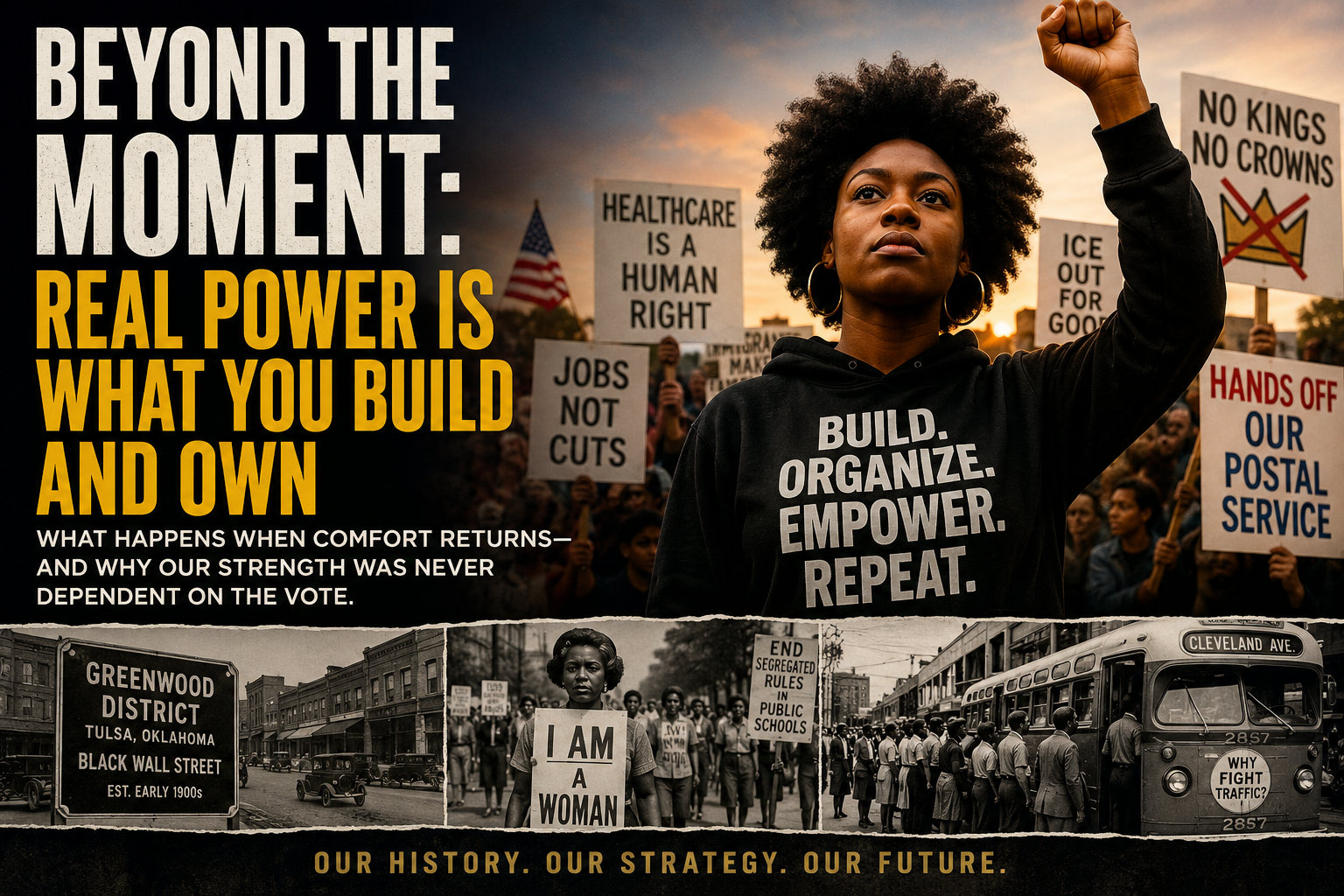
I remember reading something to the effect that when people are for something, you often draw the participation of the few, but when people are against something, you draw the participation of the many. Just look at the recent “No Kings” rallies. Although immigration appears to be the issue drawing the largest crowds, if you pay attention to the signs people are carrying, they are varied and revealing. They reflect a broad coalition of people rallying around different grievances, fears, and frustrations, all united primarily by opposition to what they perceive as a threat to their own rights or peace by an increasingly authoritarian regime.
But resolve the individual protester’s grievance, restore his or her sense of peace or stability, and too often they disappear from the protest lines, leaving those facing the deepest and most persistent struggles to fend for themselves until the broader tensions subside and society settles back into a familiar status quo, where the downtrodden eventually realize that real transformation was never truly the goal, but that satisfying those less affected by the struggle mattered more.
If we look around today, despite all of the progress we celebrate, too many of our communities remain economically fragile, politically dependent, culturally divided, underdeveloped, and perpetually vulnerable to the changing winds of institutions, elections, courts, corporations, and political parties. Too much of our collective future still rests in the hands of systems we neither own nor control.
That does not mean every alliance was wrong. It means some alliances were designed to help maintain stability within the existing order, not fundamentally transform our condition within it. There is a difference.
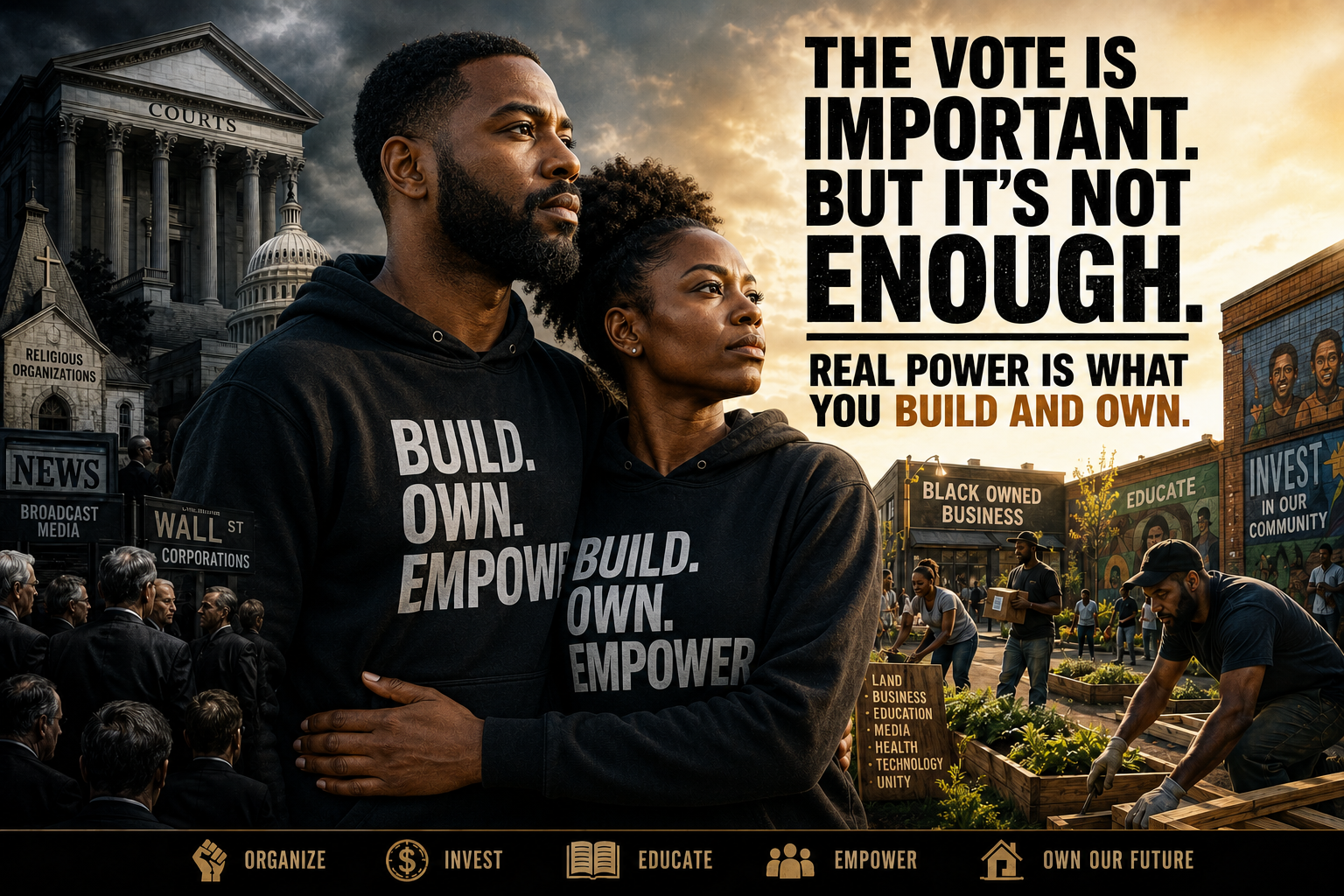
That distinction matters because the future many of us envision requires more than symbolic representation, temporary victories, or managed inclusion. It requires intentional construction. It requires long term thinking. It requires infrastructure, ownership, education, security, economic development, and communities designed to survive for generations.
It requires something I’ve begun to think of as Blackberry Grove.
Blackberry Grove is not merely a town. It is not fantasy, nostalgia, separatism, or escapism. Blackberry Grove is a framework. A philosophy. A direction. A vision of what becomes possible when people intentionally build communities rooted in ownership, safety, stability, commerce, culture, family, education, and long-term sustainability.
It is the idea that our future should not depend entirely on whether existing systems suddenly develop the political will to prioritize our advancement. Which they never will. It is the belief that communities can still be built with purpose. In spite of the walls they build to keep us from our promised land and traps they lay to ensnare and subjugate us.
When I think about Blackberry Grove, I think about strong families living in stable neighborhoods. I think about thriving local businesses, clean streets, trade schools, technology centers, bookstores, restaurants, cultural spaces, gardens, clinics, and institutions designed to serve the people who built them. I think about children growing up surrounded not only by struggle, but by visible examples of ownership, discipline, cooperation, and possibility.

I think about a place where prosperity and peace coexist intentionally. And importantly, Blackberry Grove is not about isolation from others. It is about self-determination alongside productive partnership. The vision absolutely includes allies. But alliances must be evaluated honestly according to whether they help move us closer to that future or merely help us manage decline within the present one.
That is the conversation many people are uncomfortable having. Not every alliance is equally invested in transformation. Some alliances are transactional. Some are temporary. Some exist only around elections, outrage cycles, moments of crisis, or symbolic gestures. Some are rooted more in maintaining appearances than building institutions capable of lasting one hundred years or more.
Too often we celebrate visibility while neglecting ownership. We celebrate access while neglecting infrastructure. We celebrate moments while neglecting permanence. Blackberry Grove requires permanence. It requires alliances centered around outcomes, not slogans.
The uncomfortable truth is that many of the alliances that brought us to this moment were formed within the boundaries of the existing social order. Their goal was often admission into the system, fairer treatment within the system, or protection from the worst abuses of the system. Those were understandable objectives given the historical reality Afro-Americans faced.
But Blackberry Grove demands something beyond admission. It demands construction. Construction of businesses. Construction of institutions. Construction of schools. Construction of networks. Construction of culture. Construction of multigenerational wealth. Construction of communities intentionally designed to survive turbulence instead of collapsing under it.
That kind of future cannot be built entirely through dependency. It cannot be built solely through electoral cycles, hashtags, temporary outrage, or waiting for institutions to evolve morally faster than history suggests they will. It must be built deliberately. And that means we must begin reassessing which alliances genuinely help move us toward that future and which ones merely help preserve the status quo while making us comfortable enough to tolerate it.
Some people will misunderstand that statement intentionally. They will frame any conversation about self-determination, ownership, and independent development as exclusionary. But there is nothing exclusionary about wanting to be truly free, to have safe communities, strong schools, thriving businesses, stable families, economic resilience, and institutions built with long-term survival in mind.
In reality, strong communities benefit everyone connected to them. That is why Blackberry Grove matters. Because at its core, Blackberry Grove represents the refusal to believe that dysfunction, instability, dependence, and fragmentation must remain permanent features of our future. It represents the belief that communities can still be intentionally shaped instead of merely reacted to.
The goal is not to retreat from society. The goal is to build something durable within it. Something worthy of inheritance. Something capable of surviving beyond a single election, administration, movement, or generation. Something that future generations of white supremacists will have no influence or control of.
The future belongs to those willing to build it intentionally. And the question before us now is not whether the status quo will continue or will this administration usher in a new era of Jim Crow. The question is whether we are willing to build Blackberry Grove in spite of it all.
The future they tried to stop will be built by people willing to believe beyond the constraints of today.

Leave a Reply